Comparing lithium battery capacities for solar energy storage takes more than reading the nameplate kWh. You need the usable capacity, the depth of discharge, the cycle life, and the cost per usable kWh. Keep a short checklist handy for every spec sheet: usable kWh, depth of discharge, cycle life, end-of-life definition, and price per usable kWh.
That checklist helps you match a battery to your daily load. This post compares features, pricing, and performance side by side, including a lifepo4 vs lithium-ion battery comparison. You will see how lifepo4 and other lithium-ion batteries fit home solar battery storage, and how lithium-ion solar batteries suit different homes.
Key Takeaways
-
Compare batteries by usable capacity, not nameplate rating. Usable capacity is the energy you can actually use.
-
Match battery capacity to your daily energy use. Start with your daily kWh and work backward to a target.
-
A moderate depth of discharge extends battery life. Keep daily cycling between 20% and 80% for best results.
-
Check cycle life ratings carefully. Look for test conditions like depth of discharge and temperature.
-
LiFePO4 batteries offer excellent safety and long life for home solar storage. They suit daily cycling and fixed locations.
How to Compare Lithium Battery Capacities
Nameplate vs. Usable Capacity
The nameplate rating tells you the total energy a battery holds under test conditions. The usable capacity tells you how much of that energy you can actually draw to power your home. These two numbers are not the same, and the gap between them matters for every buying decision.
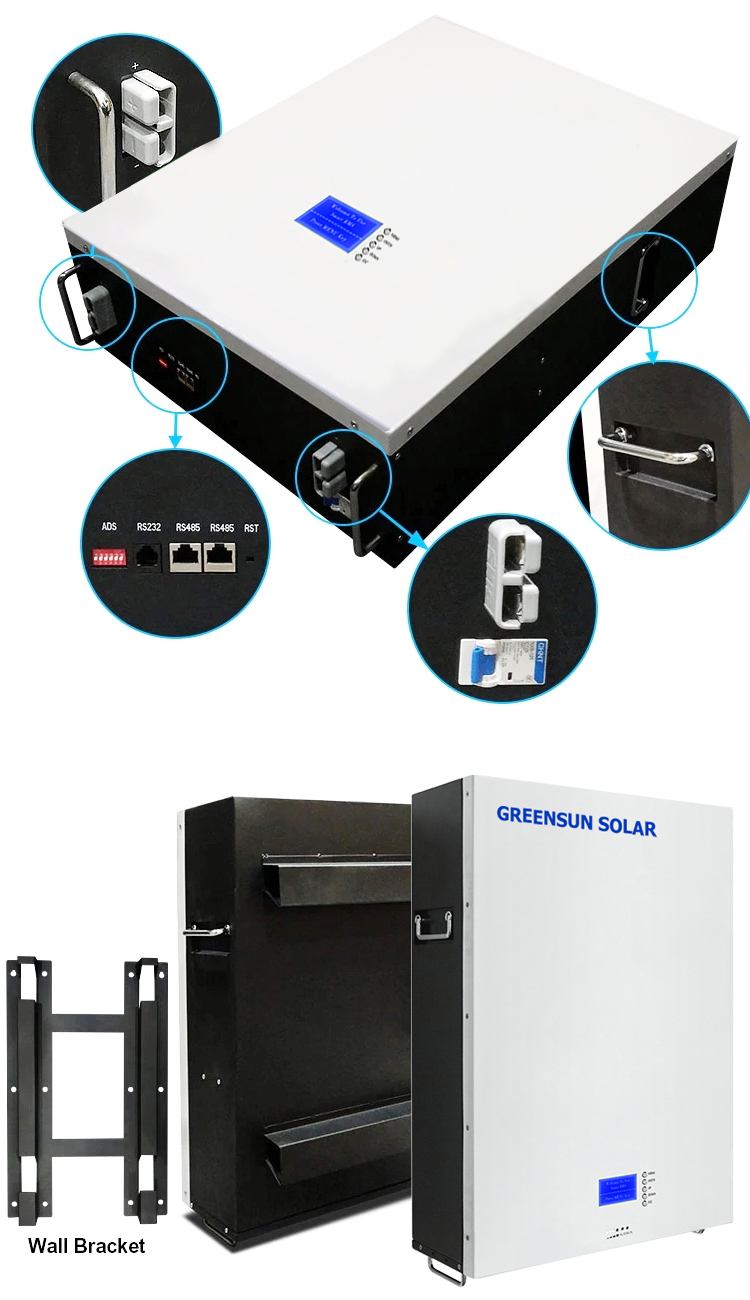
Think of nameplate capacity as the size of a fuel tank. Usable capacity is the portion you can safely burn before the tank runs dry. A battery rated at 10 kWh may deliver only 8 kWh or 9 kWh in daily service, depending on how the manufacturer sets its limits. When you compare lithium battery capacities, always ask for the usable figure. That is the number that runs your lights, your refrigerator, and your solar systems after sunset. You can compare available options in Greensun's wall-mounted lithium battery range.
Matching Capacity to Daily Energy Use
Start with your own consumption, not the battery catalog. A typical U.S. household consumes roughly 877 kWh per month, which works out to about 29 kWh per day and around 10,500 kWh annually. Your own figure may run higher or lower. Climate, home size, occupancy, and appliance efficiency all shift the total.
You can estimate daily use from your utility bill by dividing the monthly kWh by the number of days. For a closer look, list each appliance's wattage and multiply it by daily hours of use. A 150 W device running 8 hours draws 1,200 Wh, or 1.2 kWh per day. Multiply that by 30 to get 36 kWh per month. Sum every appliance to reach a daily total.

Now work backward to a capacity target. If your home uses 29 kWh per day and you want one day of backup, you need a battery that delivers 29 kWh of usable energy. Add a margin for cloudy days and for the depth of discharge limit. A battery you plan to cycle at 80% depth needs a larger nameplate rating to deliver the same usable energy. Greensun's lifepo4 lineup, for example, spans 12V, 24V, 48V, 51.2V, and high-voltage configurations with capacities up to 1MWh, so you can size storage to your load rather than the other way around.
Keep the math simple. Daily kWh first, backup days second, depth of discharge third. That order gives you a realistic storage capacity target before you ever open a spec sheet.
Features and Pricing Comparison
Weather Ratings and Self-Managed Capabilities
Check the enclosure rating before you compare anything else. An outdoor-rated cabinet survives rain, dust, and temperature swings. An indoor unit needs a garage or utility room. Ask whether the battery manages its own charging logic or depends on an external controller. A self-managed unit simplifies wiring and reduces failure points in solar systems.
Warranty terms also hinge on operating conditions. Out-of-spec temperature, current, or charger settings void coverage. Match the rating to your climate, and you protect both the hardware and the warranty.
Upfront Costs and Cost per kWh
Lithium-ion batteries generally cost more upfront than lead-acid. The gap looks large on a sticker. A fair comparison uses cost per stored kwh over the full service life.
|
Metric |
Lead-Acid (AGM) |
Lithium-Ion (LFP) |
|---|---|---|
|
Battery cost per kWh (nameplate) |
100 €/kWh |
400 €/kWh |
|
Usable capacity |
50 kWh |
50 kWh |
|
Lifespan |
500 cycles at 50% DoD |
3000 cycles at 100% DoD |
|
Cost per usable kWh per cycle |
0.42 € |
0.15 € |
The lithium-ion solar batteries cost runs about four times higher per nameplate kWh, yet the cost per usable kWh per cycle lands roughly 2.8 times lower. Lead-acid still fits tight budgets and infrequent cycling. Lithium-ion batteries reward daily cycling and long horizons.
Watch for exclusions. Battery-only pricing for lifepo4 batteries often runs $400–$700 per usable kWh at 10 kWh, and $350–$600 at 15–20 kWh. Installation, shipping, and diagnostic visits usually sit outside that figure.
Greensun illustrates the range of configurations available. The company builds lifepo4 batteries from 12V through 51.2V and high voltage, with capacities up to 1MWh. Common builds include a lithium battery 48v 100ah, a lithium battery 48v 200ah, and a rack mount 48v 200ah battery for scalable storage. That spread lets you match a lifepo4 solar battery to your load instead of oversizing. For modular storage, explore the 48V LiFePO4 battery options.
Usable Capacity and Depth of Discharge
Why Usable Capacity Matters Most
Depth of discharge (DoD) is the share of a battery's capacity you can safely draw before you recharge it. A 10 kWh battery cycled at 80% DoD gives you 8 kWh of usable energy each day. The same battery pushed to 100% DoD gives 10 kWh, but you pay for that extra energy in lifespan.
Chemistry sets the ceiling. Lithium-ion solar batteries are deep-cycle designs. They tolerate discharge to roughly 90%, and most manufacturers and installers cap everyday use at about 80% to 90%. Lead-acid options sit closer to 50%. Run the numbers on a 10 kWh nameplate rating and the gap is stark. A lithium-ion pack delivers about 8 to 9 kWh of usable capacity. A lead-acid bank of the same rating delivers about 5 kWh. You buy twice the storage for the same label.
This is why usable capacity, not nameplate capacity, drives sizing. A high usable capacity lets you cover evening loads with a smaller, cheaper pack. Compare lithium battery capacities on this basis and the ranking often flips.
How Depth of Discharge Affects Daily Cycling
Shallow cycling stretches life. The relationship is inverse and steep. A LiFePO4 battery cycled to 100% DoD lasts about 3,500–4,000 cycles. Drop to 80% DoD and you get about 5,000–6,000 cycles. At 50% DoD the figure climbs to about 6,000 cycles, and at 20% DoD it reaches 12,000 or more.

The mechanism is physical. Deep discharge plates lithium onto the anode and cracks the electrode crystal structure. Trapped lithium cuts capacity for good. Deeply discharged cells also build internal resistance, which wastes energy as heat and speeds further decay.
Real homes rarely hit the lab limits. A properly sized array keeps daily DoD low, so cycle degradation stays small and often unmeasurable. Calendar aging usually dominates. Plan your daily window with that in mind.
|
Daily SOC Window |
DoD |
Cycle Life Gain vs. 100% DoD |
|---|---|---|
|
10%–90% |
80% |
Up to 1.5x |
|
20%–80% |
60% |
Up to 2.5x |
|
30%–70% |
40% |
Up to 4x |
A 40% DoD window can yield up to four times the cycle life of full cycling. Size your lifepo4 batteries so the typical day lands in that band. You gain usable DoD headroom for cloudy spells without grinding the pack down every night. Greensun builds lifepo4 packs from 12V through high voltage, so you can scale storage to hit a comfortable daily window.
Deeper discharges impose more stress than shallow ones. LiFePO4 tolerates deep cycling better than lead-acid, but staying within recommended limits remains the best way to extend life.
Treat usable DoD as a design choice, not a fixed spec. A larger bank cycled gently often outlasts a smaller bank cycled hard, and it costs less over time.
Cycle Life and Battery Longevity
Reading Cycle Life Ratings
Cycle life counts the charge and discharge cycles a battery completes before its capacity drops below 80% of the nominal value. That headline number is conditional, not absolute. It depends on depth of discharge, temperature, and charge rate. Read every rating as a figure tied to specific test conditions.
Check four things on any spec sheet. What depth of discharge did the test use? At what temperature did it run? What charge and discharge C-rate applied? Did the count stop at 80% state of health or 70% end of life? A rating of 10,000 cycles with no stated conditions is a red flag. Such a figure is likely tested at 50% dod and cannot guide planning. Likewise, 6,000 cycles at 50% DoD differs sharply from 6,000 at 80%.
|
Test Condition |
What to Verify |
Effect on the Rating |
|---|---|---|
|
Test DoD |
Depth used in the test (80% is standard) |
Testing at 50% DoD can inflate cycle counts |
|
Test Temperature |
Lab baseline is typically 25°C |
Every 10°C above baseline can cut effective lifespan by 15–25% |
|
Test C-Rate |
0.5C is standard |
Tests at 0.2C show better results than real-world use |
|
EOL Definition |
Cycles counted to 80% SOH or 70% EOL |
A 70% EOL threshold yields 10–15% more usable cycles |
How Cycling Habits Change Lifespan
Your daily habits decide how much of that rating you realize. Lithium-ion solar batteries tolerate thousands of cycles, yet depth and temperature reshape the count. At 25°C and 80% DoD, a pack may reach about 5,000–6,000 cycles. Push to 100% DoD at the same temperature and the estimate falls to roughly 3,500–4,000. Heat compounds the stress: at 45°C, the same 80% DoD pack drops to about 3,500 cycles.

Keep daily cycling within a moderate band, roughly 20% to 80% of total capacity. Avoid charging below freezing, because sub-zero charging causes irreversible lithium plating. Rely on the BMS to block it, or choose a heated installation. Reduce heavy loads during extreme heat. Charge and discharge efficiency of roughly 90–95% also shapes long-term value, since losses decide how much solar energy reaches storage. Greensun builds lifepo4 batteries across 12V to high-voltage configurations, giving you room to size a bank for gentle daily cycling.
A high-quality LiFePO4 battery rated for at least 6,000 cycles at 80% DoD, operated under controlled temperature, can sustain 15+ years of service with capacity retention above engineering end-of-life thresholds.
End-of-Life Definitions
What End of Life Means for Capacity
End of life does not mean the battery stops working. It means the pack has fallen to a stated percentage of its original rated capacity. The industry typically sets that threshold between 70% and 80% of original capacity, measured as state of health. A 10 kWh battery at 80% state of health still runs your home, but it now behaves like an 8 kWh battery. Stationary solar storage often allows 70%, while electric vehicle applications usually stop at 80%.
That distinction matters when you plan a decade of service. A pack that reaches its threshold still delivers usable energy, just less of it. You can keep it for lighter loads or retire it to a less demanding role.
Warranty Terms and Capacity Retention
Capacity retention is the share of original capacity the battery must hold by the end of the warranty period. Manufacturers define end of life differently, so compare the definitions directly. A 10-year warranty guaranteeing 70–80% capacity retention is the industry standard for LFP solar-plus-storage. Typical residential terms run about 10–12 years with roughly 70% retained capacity at the end of the term.
|
Warranty parameter |
How it defines end of life |
|---|---|
|
Warranty years |
Time-based limit ends the term |
|
Warranted cycles |
Cycle-count limit ends the term |
|
Energy-throughput limit |
Cumulative energy amount ends the term |
|
Guaranteed remaining capacity |
Minimum state of health by end of warranty |
|
Limit precedence |
Whichever limit is reached first ends the term |
Some manufacturers treat a cycle limit as a throughput warranty. A 13.5 kWh battery would need about 2,223 cycles to reach a 30,000 kWh throughput limit, which one cycle per day meets in just over 6 years. If capacity falls below 70% during the 10-year period, the battery becomes eligible for replacement. Read the limited warranty documentation closely, because some terms advertise unlimited cycles yet impose limits for non-standard use. Greensun publishes warranty terms alongside each lifepo4 configuration, so you can check the retention figure before you buy.
LiFePO4 vs Lithium-Ion Battery Comparison
LiFePO4 vs Lithium-Ion for Solar
A lifepo4 vs lithium-ion battery for solar systems comparison rests on five factors: safety, lifespan, efficiency, cost, and performance. LiFePO4 is one lithium-ion chemistry, not a separate category. It trades some energy density for thermal stability and high cycle-life potential. That trade suits stationary solar energy storage, where weight rarely limits the design.
|
Feature |
LiFePO4 |
Other Lithium-Ion Chemistries |
|---|---|---|
|
Safety |
Excellent |
Good to excellent, chemistry-dependent |
|
Cycle Life |
Very high |
Moderate to high |
|
Energy Density |
Moderate |
High |
|
Thermal Stability |
Excellent |
Varies by chemistry |
|
Solar Storage Suitability |
Excellent |
Suitable |
|
Weight |
Relatively higher |
Often lower |
|
Long-Term Value |
Excellent |
Application-dependent |
Safety deserves a careful word. LiFePO4 is generally regarded as more thermally stable than many nickel-based chemistries. No lithium chemistry is risk-free, though. Overcharging, excessive current, internal short circuits, and physical damage can all affect a battery. A properly designed battery management system is therefore essential. Practical safety depends on cell quality, thermal management, enclosure construction, and installation practices, not chemistry alone.
Where does each fit best? Lifepo4 batteries suit most residential solar systems that prioritize long-term storage, safety, daily cycling, and predictable performance. They also serve off-grid solar, backup power, RV and marine use, commercial energy storage, and telecom backup. Conventional lithium-ion batteries are preferable when high energy density, low weight, or limited installation space is the primary requirement. Greensun builds lifepo4 solar battery packs from 12V through high voltage, so you can match a chemistry to your application rather than the reverse.
Energy Density and Space Savings
Energy density measures how much energy a battery stores per unit of weight. Lithium-ion batteries reach roughly 150–250 Wh/kg in nickel-based chemistries such as NMC. LiFePO4 typically delivers 90–160 Wh/kg. The gap is real: NMC packs more stored energy into less space and less weight.
That advantage matters most where every kilogram counts. Electric vehicles and consumer electronics reward high energy density. Stationary storage does not. A home battery sits in a garage or utility room, and its weight rarely constrains the installation. For that setting, the lower density of LiFePO4 is a negligible trade-off against its safety and lifespan benefits.
Use this lifepo4 vs lithium-ion battery comparison to weigh space against durability. Choose LiFePO4 for daily cycling and long service in a fixed location. Choose a higher-density chemistry when space and weight are tight. Both have a place in solar systems.
Other Battery and Inverter Comparison Charts
Comparing Battery Chemistries at a Glance
Broader comparison charts help you place lifepo4 batteries beside lead-acid options. AGM, GEL, OPZV, and OPZS each serve different roles. AGM suits shorter-duration standby and high discharge rates. GEL degrades more slowly in extreme heat above 45°C and tolerates very deep discharge. OPZS flooded tubular designs offer strong cycle life but need periodic watering. OPZV seals the gel electrolyte and removes that watering burden for remote sites.
|
Specification |
AGM |
|---|---|
|
Cycle Life (80% DOD) |
300–500 |
|
Self-Discharge |
1–3%/month |
|
Operating Temp Range |
-40 to +60°C |
|
Typical Lifespan |
6–10 years |
GEL carries 20–30% higher internal resistance than AGM and needs slower charge rates of 0.1–0.2C. Compare cycle life at your expected depth of discharge, temperature range, charge voltage settings, and total cost of ownership. Greensun supplies AGM, GEL, OPZV, and OPZS lead-acid batteries alongside its lifepo4 range, so you can weigh both families on one chart.
Pairing Battery Capacity with Inverter Sizing
Inverter sizing and battery capacity must move together. Size the bank as daily energy use divided by usable depth of discharge, with 80% as a sensible default. Add roughly 10% for charge and inverter losses. Then check the inverter's surge rating against motor loads. AC compressors and well pumps pull 2–3x their running wattage at startup, and undersized surge capacity is the leading cause of batteries tripping offline during outages.
Match the numbers to real usable capacity, not nameplate kWh. A mid-size home typically pairs 6–8 kW of solar with about 15 kWh of storage. Eight to twelve hours of essentials need roughly 10 kWh, while 24+ hours of full-home coverage needs 20–30 kWh. Keep battery capacity near 60–80% of daily solar output. Confirm inverter communication compatibility before you treat any lithium-ion solar batteries as a drop-in addition to existing solar systems. For larger energy storage systems, stack modular lifepo4 units rather than rounding up to the next model size. For larger installations, rack-mounted LiFePO4 battery storage provides another configuration to consider.
Compare lithium battery capacities on five points: usable capacity, depth of discharge, cycle life, end-of-life terms, and cost per usable kWh. Start with your daily energy use, then work backward to a capacity target. A high usable capacity and a long cycle life matter more than a big nameplate number.
Climate, backup needs, and budget decide the best fit. Lifepo4 batteries suit daily cycling in home energy storage. Other lithium-ion batteries fit tighter spaces. Check usable DoD and dod limits on every sheet. Lifepo4 solar storage rewards gentle cycling. Lithium-ion solar batteries serve many roles. Lifepo4 and lithium-ion both earn a place. Size lifepo4 packs for real usable energy. Lifepo4 wins on lifespan; lithium-ion batteries save space.
FAQ
What capacity should I choose for a home solar battery?
Start with your daily energy use in kWh. Divide that figure by the depth of discharge you plan to cycle. Add a margin for cloudy days. A home using about 29 kWh per day needs roughly that much usable capacity for one day of backup. Greensun builds lifepo4 packs across several voltages to match that target.
Does a bigger nameplate rating always mean more stored energy?
No. Usable capacity decides how much energy reaches your home. A lithium-ion pack at 80% depth of discharge delivers far more usable energy than a lead-acid bank of the same label. Compare usable kWh first, then check the cycle life behind it.
How long will a solar battery last?
Lifespan depends on chemistry, depth of discharge, and temperature. A quality lifepo4 battery rated for at least 6,000 cycles at 80% depth of discharge can serve 15 years or more under controlled conditions. Gentle daily cycling and moderate temperatures stretch that figure further.
What does end of life mean on a warranty?
End of life means the battery has dropped to a stated share of its original capacity, usually 70% to 80%. It still works, just with less usable energy. Read the capacity retention figure and the cycle limit together, because whichever limit comes first ends the term.
Is LiFePO4 better than other lithium-ion batteries for solar storage?
Each chemistry fits a different job. LiFePO4 favors safety, long cycle life, and daily cycling in a fixed location. Nickel-based lithium-ion batteries pack more energy into less space and weight. Choose LiFePO4 for home storage and higher-density chemistries where space is tight.